Zombie Shoot Out: Offline Game
- 4.6
- Rating
- 5.00M
- Installs
- Free
- Price
 Analysis by App-foxy
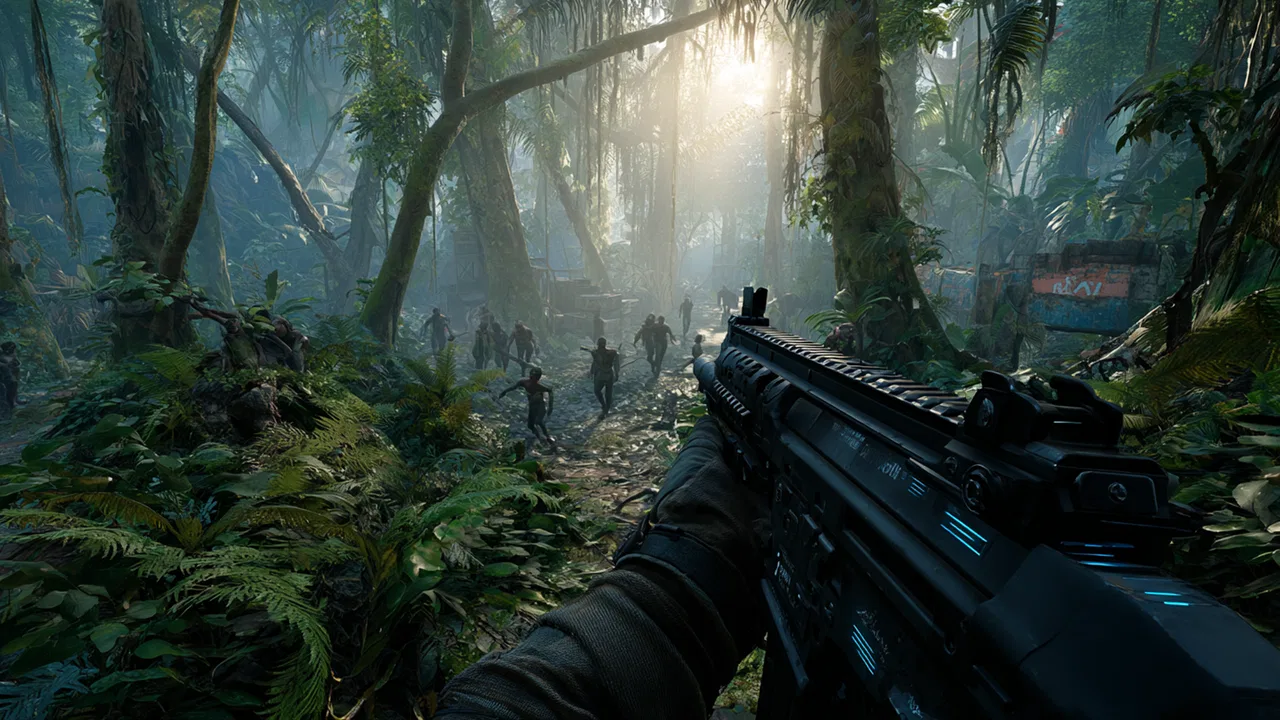
Zombie Shoot Out: Offline Game caught my attention because it aims at a very clear kind of mobile session: pick up the phone, face a zombie threat, and start shooting without needing a constant internet connection. I spent time looking at it as more than a quick action download, though. The important question is whether its straightforward survival appeal remains useful after the first few sessions, especially when many mobile shooters compete for the same spare minutes.
This is an action game from VNGGames Studios, available free of charge for Android users. Its Teen content rating is worth keeping in mind because the central experience is built around combat against zombies rather than relaxed puzzle solving. The game has reached over five million installs and holds a 4.6 average from around nineteen thousand ratings, which suggests that its simple premise has found a substantial audience.
What the first week feels like
The opening appeal is easy to understand. Zombie games work well on a phone because the objective is immediately readable: identify the danger, aim, fire, and keep moving through the encounter. I do not need to learn a complicated fictional universe before enjoying the basic loop. That makes this a convenient choice when I want action quickly rather than a long tutorial or a story-heavy commitment.
You May Also Like

 Blood Strike: 2.5 Anniversary
Blood Strike’s Loadouts Turn Every Drop Into a Tactical Gamble
A close look at Blood Strike’s custom loadouts: how fast access to signature weapons reshapes its battle royale rhythm, rewards preparation, and narrows the gap between fights.

 Pandora - Music & Podcasts
Pandora’s Music Is Easy to Start, but Harder to Recover
Pandora’s strength is its low-effort path from a seed to a station. Its weak spot is how much confidence it asks you to place in connection, setup, and quiet recovery.

 8 Ball Pool
 Is Built on Rivalries, Rematches, and Routine
A close look at the rivalries, rematches, shared routines, and unanswered safety questions that turn a quick pool match into a persistent mobile community.

 Samsung Music
’s Quiet Strength Is Playing What You Already Own
Its reach comes less from spectacle than from dependable access to a personal library. That simplicity is both the app’s strongest retention engine and its ceiling.

 AccuWeather: Weather Radar
AccuWeather Review: A Quick, Clear Forecast for Everyday Decisions
For everyday plans, the best forecast is the one you can understand quickly. AccuWeather makes rain timing, radar, and local conditions easy to act on, with a few trade-offs.

 Hill Climb Racing
Why Hill Climb Racing Still Turns Crashes Into One More Run
A tiny car, a bumpy hill and one more upgrade: Hill Climb Racing keeps resurfacing because its simple chaos makes every near-miss feel personal.
More From Our News Desk



The offline focus changes how I use it. I can treat a short session as something self-contained instead of planning around a stable connection. That is particularly handy during travel, in places with unreliable reception, or when I simply want to avoid another game competing for network access. It also makes the game more suitable for a spare-minute routine than online shooters that depend on matchmaking or live opponents.
During the first week, the strongest quality is the low barrier to entry. A player who already understands mobile shooting controls can get comfortable quickly, while someone less experienced can concentrate on positioning and timing instead of learning several unrelated systems at once. That clarity is a strength, but it also creates the first long-term question: once the basic rhythm becomes familiar, what keeps each return session feeling worthwhile?
I would not recommend judging it only by the first exciting burst of zombie action. The early novelty comes from the setting and the immediate pressure, but lasting enjoyment depends on whether the encounters continue to make me think. If every situation can be solved by holding the attack button and reacting in the same way, the initial satisfaction can fade quickly. The game is at its best when I approach each session with a small goal rather than expecting it to replace a full console-style campaign.
Why offline play matters in everyday use
One realistic use case is a commute where I know I will have periods without dependable service. I can open the game for a focused action break instead of browsing endlessly or waiting for an online lobby. Another is a short evening session when I want something more active than a casual tap game but do not want to coordinate with friends. That independence is a practical advantage, not just a line in the description.
There is a trade-off, however. Offline games cannot rely on human opponents to create fresh unpredictability. The challenge has to come from the encounters themselves, so repetition becomes more noticeable than it might in a competitive shooter. I see this as a game for controlled, personal sessions rather than a social replacement for multiplayer action.
Controls, attention, and the right session length
My advice is to begin with short sessions and pay attention to how the controls feel on your particular phone. Action games can be enjoyable on a smaller screen, but aiming and movement demand more concentration than a turn-based game. If your hands cover important parts of the display or you tend to play while distracted, the experience may feel more frustrating than exciting.
A useful habit is to play when you can give the screen your full attention. That sounds obvious, but zombie encounters punish divided focus more than many casual games do. I would not use it while walking, eating, or trying to follow a conversation. Its offline convenience makes it easy to open anywhere, yet the shooting format still deserves a proper moment of concentration.
Whether it earns a place after the novelty
I look at the question of whether the game deserves a lasting spot through the small moments when its offline format is genuinely useful, not through the excitement of a first session. That also means weighing the free starting point against the optional purchase range without assuming that spending improves the experience. From there, I consider which players are likely to keep enjoying its focused zombie action—and when a different kind of shooter would be a better fit.
Month-to-month value depends on your definition of variety
For me, the game’s recurring value comes from convenience and repeatable action, not from an expectation of endless discovery. If I want a dependable offline shooter that I can revisit in compact bursts, it has a clear role. The free entry also lowers the risk of trying it, although optional purchases range from $0.99 to $99.99 per item, so I would decide on a spending limit before getting deeply invested.
That price range creates an important distinction between trying the game and building a long-term habit around it. A free download is useful for testing the controls, pacing, and tolerance for repetition. It does not automatically mean that every later improvement or convenience will be free. I would keep the first few sessions focused on whether the core shooting is satisfying without spending, then make any purchase decision only after the game has proved that it belongs in my routine.
The current version is 1.18.0, and the game supports Android 7.0 or later. That makes it accessible to people who are not using the newest phone, although actual comfort will still depend on the device’s screen, responsiveness, and general performance. I would check the operating-system requirement before installing, especially on an older handset kept as a backup.
For month-to-month use, I find a goal-based approach more sustainable than opening it without a plan. I might play for a short break, try to improve my handling of a difficult encounter, or use it as an offline alternative when other games are inconvenient. This prevents the repetition from becoming a chore. The game is less convincing when I expect every return to deliver a completely new experience.
Who will probably enjoy it most
I think it suits players who like zombie themes, direct shooting, and self-contained mobile sessions. It is also a sensible option for someone who wants action without depending on a live community. The Teen rating means I would keep the content in mind when choosing it for a younger player, and I would not treat the game as a family-friendly default simply because it is easy to download.
It may work especially well for people who rotate several games instead of committing to one. I can imagine keeping it installed for travel days or for moments when I want a quick action fix but do not want to spend time reconnecting to a server. In that role, it does not need to provide a huge daily routine to be useful.
I would be more cautious if you need deep narrative progression, cooperative play, competitive ranking, or a constantly changing social environment. Those players may find a connected multiplayer shooter or a larger campaign game more rewarding. Zombie Shoot Out is strongest when its simplicity is a benefit; it is weaker when simplicity feels like a lack of depth.
The maintenance burden is small, but the habit needs management
Because it is designed around offline shooting, the game does not ask me to organize a team or protect a competitive schedule. That removes a common source of maintenance in mobile games. I can step away and return without worrying about letting teammates down. For a casual player, that makes the game easier to keep available without turning it into another obligation.
The main maintenance burden is personal rather than technical: managing repetition and spending. Free-to-play action games can encourage the feeling that the next upgrade or purchase will make the experience smoother. I recommend treating optional purchases as a budget decision, not as a requirement for proving whether the game is fun. If the basic loop does not hold my attention, buying more items is unlikely to solve the underlying problem.
Storage and battery habits also matter in practical terms, even though they are not reasons by themselves to reject the game. I would avoid leaving an action game open in the background when I am finished, particularly on an older phone. More importantly, I would not install it expecting offline play to mean zero maintenance forever. Games can still change through updates, and I would occasionally check that the installed version remains compatible with my device.
My preferred routine would be simple: keep it available for journeys and short breaks, play with a clear stopping point, and review after a few weeks whether I am choosing it because I enjoy it or merely because it is already installed. That small check helps separate genuine recurring value from habit created by convenience.
Where fatigue is most likely to appear
The biggest risk is repetition in the central action loop. Shooting zombies is immediately readable, but the same clarity can become predictable if the situations do not continue to demand different decisions. I notice fatigue when I stop reacting to what is happening and begin going through the motions. At that point, a break is more useful than forcing longer sessions.
Another source of fatigue is the mismatch between a player’s expectations and the game’s scope. The store summary presents intense survival action, and that is the right lens through which to approach it. I would not expect the same character development, world building, or strategic breadth found in a large premium action title. Comparing it directly with those games can make a focused mobile experience seem smaller than it intends to be.
Optional purchases can also affect how relaxed the game feels. The presence of items priced as high as $99.99 means I would pay attention to the purchase screen and avoid tapping through quickly. Even when spending is voluntary, the awareness of a broad price range can change the mood of a supposedly casual session. My solution is to set a personal rule before playing: enjoy the free experience first, and only consider spending if I can clearly explain what value I am receiving.
The Teen rating may be another reason some people should skip it. The zombie-combat theme is not a minor decoration; it defines the action. If you are looking for a calm game for children, a nonviolent puzzle title would be a better choice. Likewise, if you dislike horror imagery or repeated combat, offline availability will not make the subject matter more comfortable.
Tips for getting more value from repeated sessions
I get better results when I avoid marathon play. Short sessions preserve the urgency of the encounters and make the game easier to fit around real life. Once I feel myself playing automatically, I stop rather than turning a quick action break into a tiring obligation.
I also recommend using the game as a gap-filler instead of a primary gaming platform. It works well when I have a limited window, no reliable connection, and a desire for direct action. It is a poorer fit when I have a full evening and want a layered story, meaningful exploration, or interaction with other players.
A third useful approach is to evaluate progress by consistency rather than by spending. I ask whether my control, timing, or decision-making feels more comfortable after several sessions. If the answer is yes, the game is giving me a reason to return. If the only motivation is chasing a purchase or clearing another nearly identical encounter, I take that as a sign that its place in my rotation should be smaller.
Finally, I would install it on a device that meets the Android requirement and test it in the exact circumstances where I expect to use it. A game that feels comfortable at home may be less practical during travel if the screen is too small or the phone’s battery is already weak. That personal test is more valuable than assuming every Android handset will provide the same experience.
My long-term verdict
After the first-week excitement fades, Zombie Shoot Out: Offline Game remains appealing as a focused, accessible action option rather than an all-purpose mobile game. Its strongest lasting qualities are the offline format, the direct zombie-shooting premise, and the freedom to play without coordinating with anyone else. Those traits give it a genuine place in a rotation for commuters, occasional players, and fans of compact survival sessions.
It does not earn that place automatically. Players who need constant novelty, deep progression, or social competition may move on once the basic rhythm becomes familiar. The broad range of optional purchase prices also means I would approach the free-to-play structure carefully and keep spending separate from the question of whether the shooting itself is enjoyable.
VNGGames Studios has made a game that is easy to understand and convenient to revisit. I would recommend giving it a fair trial if you specifically want offline zombie action and are comfortable with the Teen rating. I would skip it if your ideal action game depends on multiplayer variety or a substantial campaign. Its lasting value comes from being a reliable short-session shooter, not from pretending to be something larger than that.
With a 4.6 average from around nineteen thousand ratings, it has clearly connected with many players, but my recommendation is still personal: install it for the offline convenience, test whether the encounters hold your attention after the first novelty burst, and set your purchase boundaries early. If it becomes the game I reach for when I have ten quiet minutes and no connection, it has earned its space. If I find myself playing only because it is free and already installed, it is time to rotate it out.
FAQs for Zombie Shoot Out: Offline Game
01What is Zombie Shoot Out: Offline Game?
Zombie Shoot Out: Offline Game is an action shooter focused on surviving waves of zombies and clearing dangerous areas. You typically move through compact levels, aim at approaching enemies, collect or upgrade weapons, and try to remain alive as the difficulty increases. Its offline format makes it suitable for short gaming sessions when you do not have a reliable internet connection.
02Can I play Zombie Shoot Out: Offline Game without an internet connection?
Yes, the main attraction of Zombie Shoot Out: Offline Game is that its core gameplay is designed to work offline. After installing and opening the game, you can generally play its shooting and survival missions without mobile data or Wi-Fi. However, an internet connection may still be required for downloading updates, viewing optional advertisements, restoring purchases, or accessing any features added by a later version.
03Is Zombie Shoot Out: Offline Game suitable for children?
The game is built around shooting zombies, so it includes cartoon-style violence, weapons, explosions, and frequent combat. Parents should check the age rating shown on the Google Play Store or App Store before allowing a child to download it. Although the presentation may be less realistic than a mature horror title, the constant action and zombie theme may not be appropriate for younger players.
04Does Zombie Shoot Out: Offline Game include in-app purchases or advertisements?
Like many free mobile action games, Zombie Shoot Out: Offline Game may use advertisements and optional in-app purchases to support development. Ads can sometimes appear between missions or offer rewards such as extra coins, ammunition, or temporary boosts. The exact offers can vary by device and version, so review the store listing and purchase settings before playing, especially if children use the device.
05What should I know before downloading Zombie Shoot Out: Offline Game?
Before downloading, check that your Android or iOS device meets the current requirements and has enough free storage for the installation and future updates. The game is best suited to players who enjoy quick shooting challenges, zombie survival themes, and repetitive level-based action. Also review permissions, privacy information, age classification, advertisements, and recent user feedback because features may change between releases.
Pros
- Works without an internet connection once installed.
- Simple controls make it easy to start playing quickly.
- Short missions are convenient for brief gaming sessions.
- Zombie variety keeps encounters from feeling completely repetitive.
- Offline play avoids ads requiring constant data access.
Cons
- Repetitive shooting may become monotonous after extended play.
- Limited story depth may disappoint players seeking a strong narrative.
- Progression can feel slow without upgrades or repeated missions.
- Graphics may look dated on newer phones and tablets.
- The game may take substantial storage space for an offline title.

Zombie Shoot Out: Offline Game
Gallery